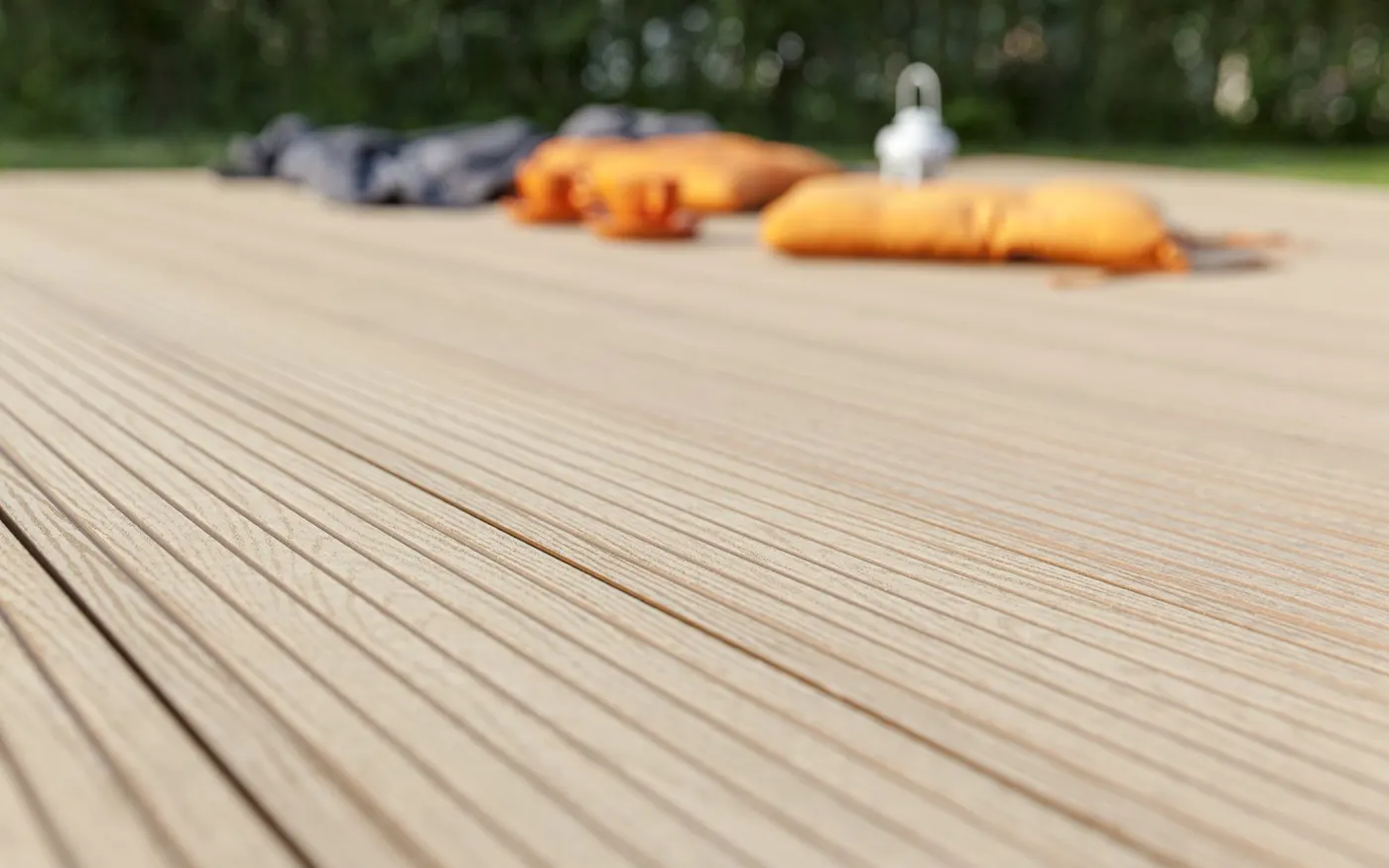
In short
- Composite decking is wood fibre and plastic formed into a board.
- Modern boards have a hard outer cap that resists stains and fading.
- It costs $380 to $700 per m² built and needs washing, not oiling.
Composite decking is a board made from wood fibre and plastic, heated, mixed and pushed through a die into the shape of a decking board. It is used in place of timber boards on a deck. The frame underneath is still timber or steel.
What it is made of
Most composite is roughly half wood and half plastic. The wood is sawdust and waste fibre from mills. The plastic is polyethylene or polypropylene, much of it recycled from packaging. Pigment, ultraviolet stabilisers and binding agents are added. Some boards replace the wood with rice husk or bamboo fibre, and a few use no plant fibre at all and are better described as PVC or mineral boards.
Capped and uncapped
Early composite was the same material all the way through. Because the wood fibre was exposed at the surface, it could absorb water, stain and grow mould. Most boards today are capped: a thin, dense polymer skin is bonded around the core during manufacture. The cap carries the colour and grain pattern and keeps water and stains out. If you are comparing prices, check that you are comparing capped with capped.
Solid, hollow and grooved
- Solid boards are heavy and feel like hardwood underfoot.
- Hollow boards have channels inside to save weight and cost.
- Grooved-edge boards take hidden clips, so no screws show. Square-edge boards are screwed from the top and are used at edges and on stairs.
How it is installed
Composite goes on a normal deck frame with three differences. Joists sit closer together, typically 400 to 450 mm apart, because the boards are more flexible than hardwood. Boards expand and contract along their length with temperature, so the ends are gapped by the amount the maker specifies. And the deck needs airflow underneath, so very low decks need careful detailing.
What is good about it
- No oiling, staining or sanding. A wash a couple of times a year is enough.
- No splinters, which matters with children and bare feet.
- It will not rot and termites are not interested in it.
- Colour is consistent, and capped boards fade only slightly in the first year.
- Warranties of around 25 years are common.
What is not
- It costs more than most timber to buy.
- Dark colours get hot in direct sun.
- Scratches and burns cannot be sanded out.
- It does not look or feel exactly like timber, though the better boards are close.
- It is hard to recycle at the end of its life.
Where composite decking suits
- Shaded and damp spots where timber would grow mould and stay slippery.
- Pool surrounds, with a slip-rated board, because wet feet and splinters do not mix.
- Rental and holiday houses where nobody is around to oil a deck each year.
- Family decks used barefoot, under a roof or in a light colour.
It suits less well on a west-facing deck in a dark colour, on blocks with the highest bushfire ratings, and on heritage houses where timber is expected.
Looking after it
Sweep leaves off before they rot down, and wash the deck with warm soapy water and a soft broom twice a year. Keep a pressure washer well back from the surface, as a close jet can mark the cap. Put a mat under the barbecue, avoid rubber-backed mats that trap moisture, and lift metal furniture when you move it.
How long it lasts
Capped composite is expected to last 25 to 30 years. The frame is the limit as often as the boards: a treated pine frame that stays damp will fail first, so some builders put composite on a steel or hardwood frame.
What it costs
Boards are $110 to $260 per square metre and a finished deck $380 to $700 per square metre on a low frame. See composite decking prices for examples, how to compare boards and timber versus composite if you are still choosing.
Guide prices in Australian dollars including GST, on a site with reasonable access. A written quote after a site visit is the only firm figure.
When you are ready for a firm price, the deck builders page shows the company listed for each area.
Common questions
Is composite decking plastic?
Partly. It is a blend of plastic and wood or other plant fibre. Boards with no fibre at all are PVC decking.
Does composite decking fade?
Capped boards lighten slightly over the first months and then hold. Uncapped boards fade more and less evenly.
Is composite decking slippery when wet?
Most capped boards have a textured surface with a wet slip rating. Check the rating for the exact board if the deck is beside a pool or on stairs.
Can composite decking be painted or stained?
It is not designed to be. Paint will not bond well to a capped surface. Choose a colour you are happy to keep.