In short
- Australian decks are mostly hardwood, treated pine or composite.
- Boards alone run from $50 to $80 per m² for treated pine to $110 to $260 for composite.
- Bushfire rating, shade, salt air and how much upkeep you will do should decide the material.
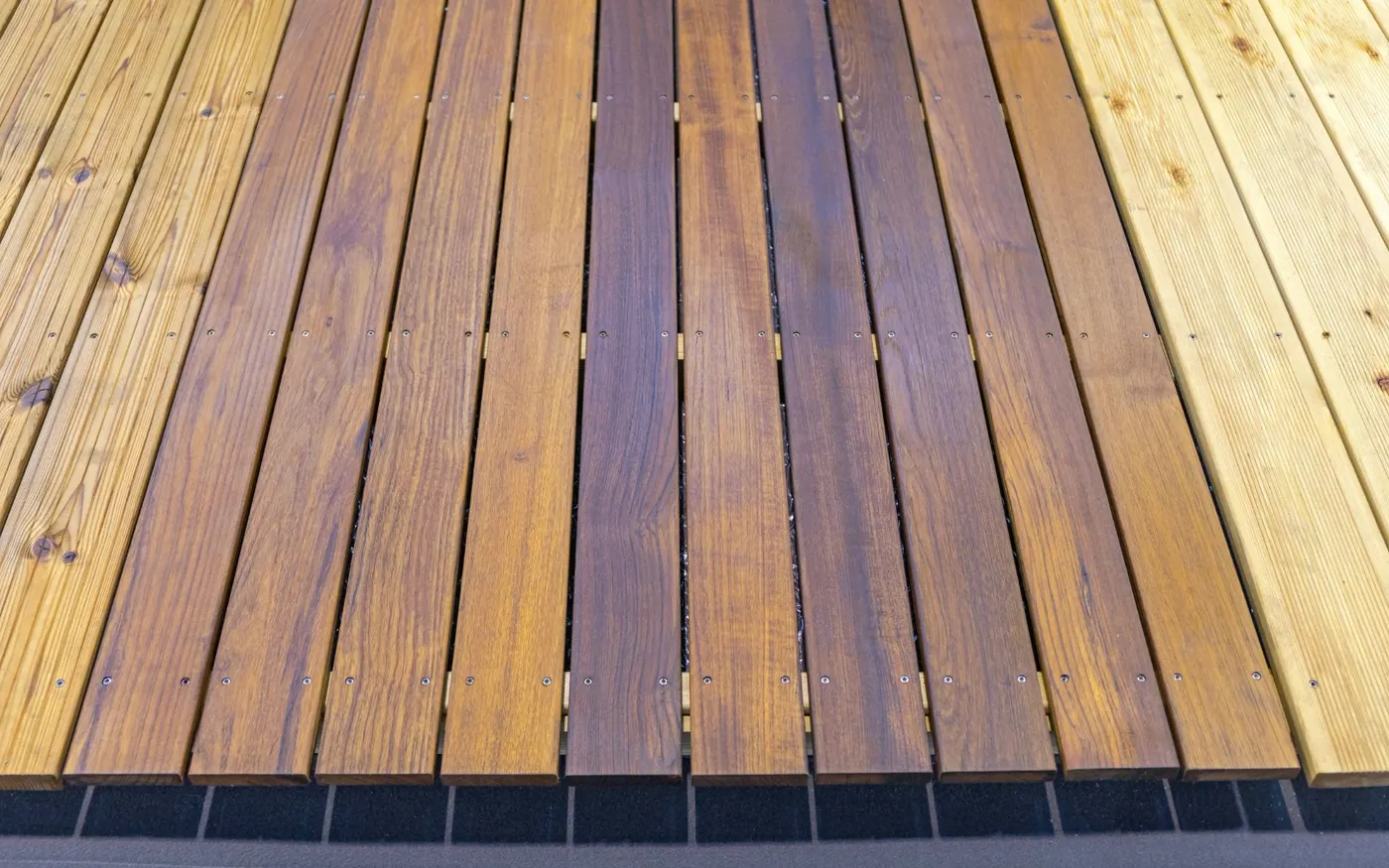
There are six kinds of decking board you can buy in Australia: hardwood, treated pine, wood-plastic composite, PVC, aluminium and modified timber. Most decks are built from the first three. The right one depends less on looks than on where the deck sits and how much time you want to spend looking after it.
The main decking materials compared
| Material | Boards per m² | Upkeep | Typical life |
|---|---|---|---|
| Treated pine | $50 to $80 | Stain or oil every 1 to 2 years | 15 to 25 years |
| Merbau (kwila) | $90 to $150 | Oil every 12 to 18 months | 25 years or more |
| Spotted gum, blackbutt, ironbark | $130 to $220 | Oil every 12 to 18 months | 25 to 40 years |
| Capped composite | $110 to $260 | Wash twice a year | 25 to 30 years |
Guide prices in Australian dollars including GST, on a site with reasonable access. A written quote after a site visit is the only firm figure.
Hardwood decking
Australian hardwoods are dense, strong and naturally durable above ground. Spotted gum ranges from pale brown to deep chocolate and is one of the most popular species on the east coast. Blackbutt is a light honey colour and widely available in New South Wales and Queensland. Ironbark is the hardest and heaviest of the common species. Jarrah, from Western Australia, is deep red.
Merbau, sold as kwila in some places, is imported from South-East Asia and the Pacific. It is stable, easy to work and usually cheaper than Australian hardwood, which is why it is on so many decks. It bleeds a brown tannin for the first few weeks, so it is kept away from pale paving and pool coping until it has weathered. The kwila cost guide has the detail.
All hardwoods grey off in the sun unless they are oiled. That is a look some people want. If you want to keep the colour, plan on oiling once a year.
Treated pine
Plantation pine treated against rot and termites is the cheapest decking in the country. It is soft, so it marks more easily than hardwood, and it needs a stain or oil to stop it cracking and cupping. It takes colour well, so a stained pine deck can look very good for the money. Boards for decking should be treated to H3. See the cheapest decking timbers for where it does and does not make sense.
Composite decking
Composite boards are made from wood fibre and plastic, pressed into a board with a tough outer cap. They do not need oiling, will not splinter and come with long warranties. They cost more than most timber, get hotter than timber in full sun in darker colours, and cannot be sanded back if they are scratched. What composite decking is and timber versus composite cover the trade-offs.
PVC, aluminium and modified timber
- PVC decking contains no wood fibre at all. It is light, will not absorb water and suits pool surrounds and jetties. It expands and contracts more than composite.
- Aluminium decking is non-combustible, which makes it one of the few options on the highest bushfire ratings and on apartment balconies. It is the most expensive board here.
- Modified timber is softwood that has been heat-treated or chemically altered so it resists rot without preservative. It looks and works like timber and sits between hardwood and composite on price.
Choosing for your site
- Bushfire-prone land. The deck must suit the block's BAL rating under AS 3959. Seven hardwoods are accepted as bushfire-resisting, including merbau, spotted gum, blackbutt and red ironbark, and some composites are tested to particular ratings. Confirm the rating before you choose.
- Coast. Use stainless steel fixings within a kilometre or so of breaking surf. Any board will last if the fixings do.
- Around a pool. Look for a slip rating and avoid fresh merbau next to pale stone.
- Full western sun. Choose lighter colours, in timber or composite.
- Shade and damp. Leave gaps for airflow and allow clearance under the frame. Mould grows on any surface that stays wet.
Whatever goes on top, the frame decides how long the deck lasts. Posts in the ground should be treated to H4 or sit on galvanised stirrups above the footing, and joists must be spaced for the board being used.
When you are ready for a firm price, the deck builders page shows the company listed for each area.
Common questions
What is the most popular decking timber in Australia?
Merbau and spotted gum are the most common hardwoods, with treated pine the usual budget choice. Composite has taken a growing share of new decks.
Which decking lasts longest?
Dense hardwoods such as ironbark and spotted gum, and good capped composites, can all pass 25 years on a sound frame. Treated pine has the shortest life of the common options.
Which decking needs the least maintenance?
Capped composite, PVC and aluminium need washing only. Every timber needs oil or stain to keep its colour.