In short
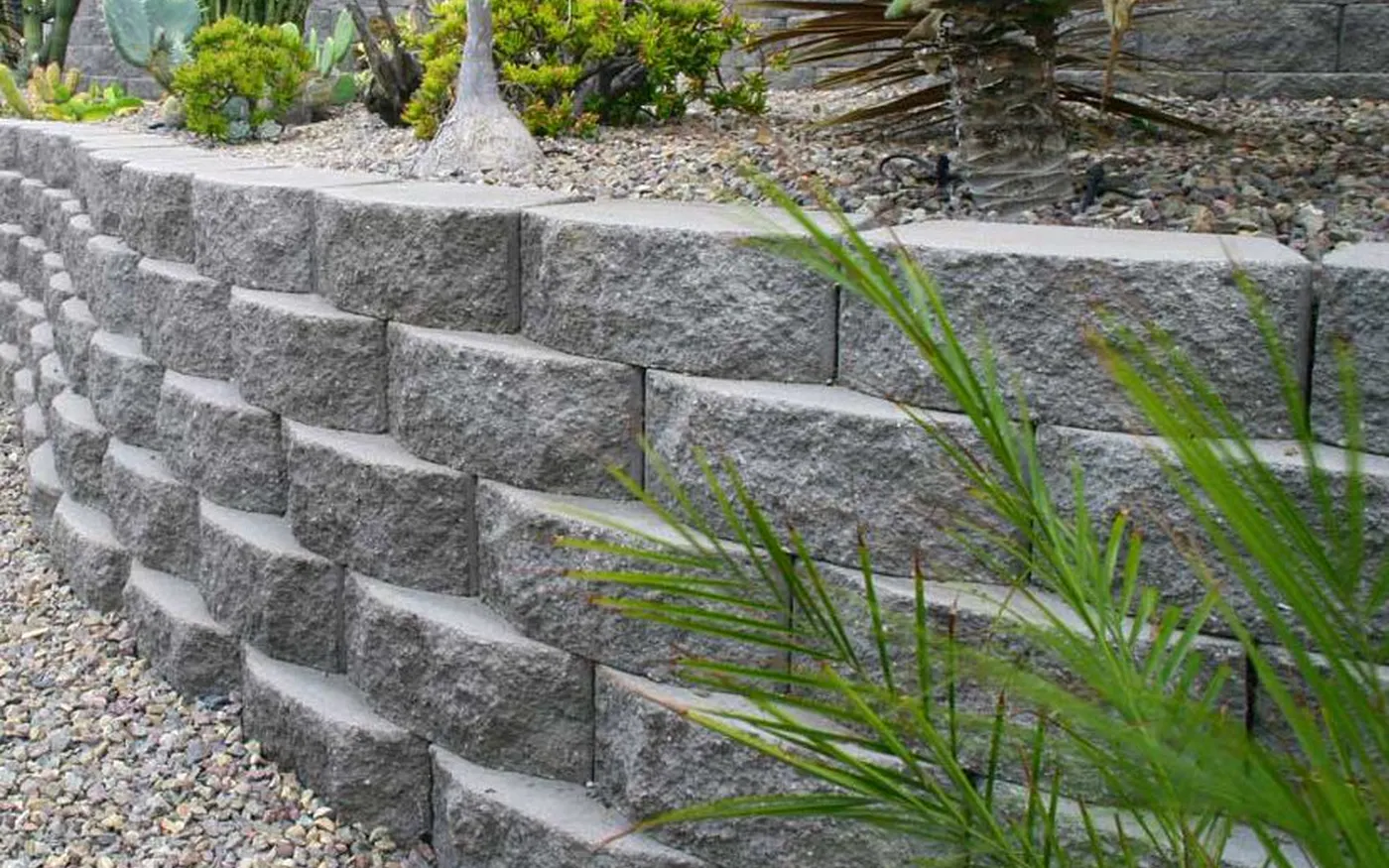
- Keystone is a brand of interlocking concrete block. The wall type is called segmental.
- Blocks are dry-stacked with no mortar on a compacted base.
- Allow $400 to $700 per m² of wall face, built and drained.
A Keystone retaining wall is built from interlocking concrete blocks stacked dry, with no mortar, on a compacted gravel base. Keystone is a brand name that has become the everyday word for this kind of wall. Engineers call it a segmental retaining wall, and several Australian masonry makers sell their own versions.
How keystone walling works
Each block is heavy and has a way of locking to the course below: a lip at the back, pins through the block, or a shaped tongue. The locking detail steps each course slightly back into the bank, so the finished wall leans. That lean, and the weight of the blocks, is what resists the soil. Because there is no mortar, the wall can move a few millimetres with the ground without cracking, and water can drain through the joints.
How high can a Keystone wall go?
As a plain gravity wall, most garden-sized blocks are good for roughly 800 mm to 1 metre, depending on the block, the soil and what is above the wall. Each maker publishes its own tables. To go higher, layers of geogrid, a strong plastic mesh, are laid between courses and run back into compacted fill. The grid ties the wall face to a block of soil behind it, so the whole mass acts as the wall. Reinforced segmental walls are built many metres high beside roads and in subdivisions. Anything using geogrid needs an engineer's design.
How a segmental wall is built
- Excavate a trench for the base and cut the bank back for drainage and, if needed, geogrid.
- Base. A layer of compacted road base or crusher dust, level side to side. The first course is partly buried.
- First course. This is the slow part. Every block is levelled, because any error carries up the wall.
- Stack. Each course is laid with joints staggered. Hollow blocks are filled with gravel.
- Drainage. A slotted drain behind the first course, with at least 300 mm of clean gravel behind the blocks for the full height.
- Geogrid and compaction at the levels the design calls for, with fill compacted in thin layers.
- Capping units glued on top.
What it costs
| Item | Guide price |
|---|---|
| Segmental block wall, gravity | $400 to $700 per m² |
| Treated pine sleepers, for comparison | $250 to $450 per m² |
| Reinforced core-filled block, for comparison | $550 to $900 per m² |
| Engineer's design, when needed | $1,000 to $3,000 |
Guide prices in Australian dollars including GST, per square metre of wall face, built and drained, on a site with reasonable access. A written quote after a site visit is the only firm figure.
A wall 12 metres long and 900 mm high is about 11 square metres: $4,400 to $7,700. Geogrid-reinforced walls cost more per square metre because of the extra excavation and compacted fill.
Strengths
- Lasts 50 years or more. Concrete block does not rot.
- Curves easily, inside and outside, which sleepers cannot do.
- No concrete footing and no mortar, so it suits tight access.
- Split-face and coloured blocks look finished without render.
- Tolerates small ground movement.
Weak points
- Dearer than timber.
- Takes more room than a sleeper wall: the blocks are deep, and the wall leans back as it rises.
- Poor base preparation shows as a wavy wall within a year or two.
- Tall walls need a wide zone of reinforced fill behind them, which is not available on a tight boundary.
Can you build one yourself?
A straight garden wall up to about half a metre is within reach of a careful owner, and the work is nearly all in the base. Above that, the weight of the blocks, the excavation and the compaction make it a job for a builder with a plate compactor and a small excavator. Anything with geogrid, a load above it or an approval requirement is not a weekend project.
Approval
Block walls follow the same rules as any other retaining wall. The height at which approval is needed depends on the state, and loads near the top change it. See retaining wall regulations in Australia. Confirm with your council or a private certifier before you build.
Comparing types? See timber retaining walls and the cost guide.
When you are ready for a firm price, the retaining walls page shows the company listed for each area.
Common questions
Is Keystone a type of wall or a brand?
A brand. The generic name is segmental retaining wall, and other makers sell blocks that work the same way.
Do Keystone walls need a concrete footing?
No. They sit on a compacted gravel base. That base has to be level and well compacted or the wall will settle unevenly.
Do segmental block walls need drainage?
Yes. A drain at the base and a gravel zone behind the blocks stop water pressure building up, the same as any other wall.